The Data Advantage #11, September 2026

Newsletter: Issue #11

THE ORCHESTRATION ADVANTAGE

Turning Context into Confident Action

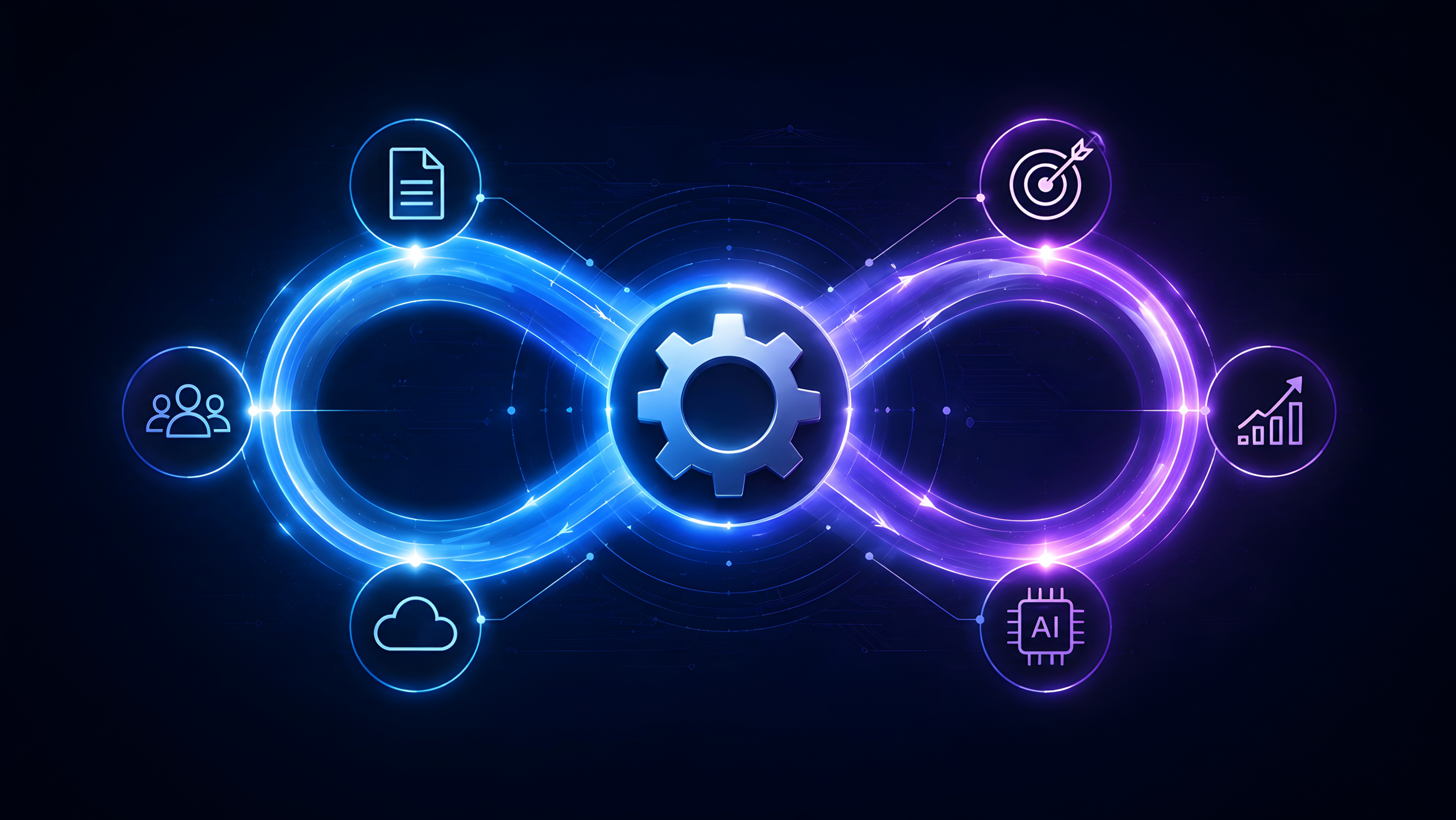
AI is moving from answering questions and automating individual tasks to coordinating experiences, people, data and decisions. The next advantage will come from giving that intelligence the context it needs to act.

Welcome to the Data Advantage: Issue #11,

Last month, Issue 10 made the case that context — not simply more data  is what makes AI genuinely useful inside a contact centre and across the wider enterprise. That argument resonated because it matched what most operations teams already sensed: the constraint was rarely a lack of dashboards. It was a lack of connected understanding.

Issue 11 picks up from there and asks the next question. Once an organisation has context, what does it actually do with it? The answer taking shape across the industry, in analyst research, and in how platforms like Genesys and emite are being built,  is orchestration: coordinating that context into confident, connected action, at the pace decisions actually need to be made.

This issue walks through what that looks like in practice: how workforce management is becoming workforce intelligence, why the contact centre is no longer the edge of customer experience, how to scale an AI pilot into something durable, why role-based intelligence matters as more people rely on the same data, and the architecture that underpins all of it.

As always, we’ve grounded this issue in what the data and the analysts are actually saying — Gartner, Forrester and McKinsey feature throughout — rather than starting from a vendor pitch and working backwards.


AT A GLANCE

The enterprise AI conversation is shifting from individual capability to coordinated orchestration. Analysts across Gartner, Forrester and McKinsey are converging on the same conclusion, and Genesys Xperience 2026 (September 1–3, Las Vegas) is one clear signal of it in the CX and workforce space. Here’s the shift, in brief.

40%

Of enterprise apps will embed task-specific AI agents by end of 2026, up from under 5% in 2025 (Gartner)

<10%

Of enterprises have scaled agentic AI to deliver tangible value, despite ~two-thirds experimenting (McKinsey)

7

Layers of architecture behind orchestrated intelligence (see Section 8)

TL:DR

Quick Read

1. THE ORCHESTRATION ERA HAS ARRIVED

For years, organisations have invested in systems designed to optimise individual parts of the customer and employee experience.

  • CRM manages customer relationships.
  • Workforce management plans capacity and schedules.
  • Contact centre platforms manage interactions.
  • ERP systems manage operational processes.
  • Analytics platforms measure performance.
  • AI adds another powerful layer of capability.

Each system can be highly effective within its own domain. The next opportunity is creating intelligence across those domains.

The analyst community is converging on the same conclusion from different angles. Gartner projects that 40% of enterprise applications will feature task-specific AI agents by the end of 2026, up from under 5% in 2025, a shift it describes as moving enterprise software “from tools supporting individual productivity into platforms enabling seamless autonomous collaboration and dynamic workflow orchestration.” Within CX specifically, Genesys is placing AI-powered experience orchestration at the centre of its current strategy, with its Xperience 2026 programme exploring agentic orchestration as part of a new CX operating model and how AI, data and orchestration can connect experiences with enterprise workflows.

Automation typically executes a predefined task. Orchestration coordinates multiple signals, systems and decisions around an outcome.

Consider a customer contacting an organisation because an order has not arrived. Managing the interaction is important. But delivering the right outcome may require more:

  • What is the order status?
  • Has the customer contacted the organisation before?
  • Is there a fulfilment problem affecting other customers?
  • What service level applies to this customer?
  • Is there already an open case?
  • Is there an operational issue likely to delay resolution?
  • What action is available to the employee?

Those answers may exist across several different systems. The customer, however, does not experience those systems independently. They experience one organisation.

The same principle increasingly applies to AI. For AI to participate meaningfully in orchestration, it needs more than a model and a prompt, it needs access to relevant, connected and governed business context.

That shifts the enterprise AI conversation from:

What can the AI do?          to:           What does the AI need to understand to help achieve the right outcome?

And that is fundamentally a data question.

2.From Context to Action: Act with Confidence

Data becomes most valuable when it helps an organisation decide what to do next, and that takes more than one system’s view of a signal. Bringing together interaction data, workforce information, CRM, ERP and operational context turns a raw signal into real understanding and understanding is what gives people, and increasingly AI, the confidence to act.

Gartner names “the need for context” as one of its defining data and analytics themes for 2026.

3.From Workforce Management to Workforce Intelligence

Workforce management is already a mature discipline, in the contact centre, on the retail floor, and out in the field, but the next gain isn’t a better WFM engine. It’s the operational, customer and business context sitting around the plan that the plan itself was never designed to see. Layering in real-time queue performance, adherence, demand patterns and operational events turns a workforce alert into a workforce intelligence answer, wherever the workforce operates.

Quick Read

4. THE CONTACT CENTRE IS NO LONGER THE BOUNDARY OF CX

Forrester’s Q1 2026 Wave evaluation of customer service solutions puts this shift plainly: AI is moving from a reactive, deflection-focused sidecar to the primary service layer, with agentic execution, orchestration, guardrails and policy control named as the capabilities that now separate leaders from the rest. That reframes what “the contact centre” even means.

Genesys reflects the same shift from a CX and workforce angle. One of the strongest themes at its Xperience 2026 programme is expanding CX beyond the contact centre, describing the opportunity as connecting conversations with the systems and teams required to drive customer outcomes beyond the immediate interaction. Its Xperience session on AI-powered outbound similarly explores using real-time data and orchestration to create connected customer journeys across voice and digital channels, rather than treating outbound interactions as isolated campaigns.

It reflects a simple reality: most customer outcomes depend on much more than the conversation.

  • A customer calls about an insurance claim, the interaction sits in the contact centre, but the outcome depends on the claims platform.
  • A customer contacts a utility about an outage, the conversation is part of CX, but the answer depends on operational network information.
  • A customer asks about a delayed delivery, the agent handles the conversation, but the experience depends on fulfilment and logistics.
  • A customer questions a financial transaction, the contact centre handles the enquiry, but the data may sit within banking or payment platforms.

The experience and the operation are connected. Our data architectures increasingly need to reflect that.

Customer experience data

•      Voice

•      Digital

•      Journeys

•      Quality

•      WFM

•      Interaction history

Enterprise context

•      CRM

•      ERP

•      Finance

•      Billing

•      Orders

•      Service

•      HR

•      Digital

•      Operational systems

= Connected Business Intelligence

This creates an opportunity to view CX differently. Rather than asking only:

“How efficiently did we handle the interaction?”

organisations can begin to ask:

“What was the underlying reason for the interaction, what business process influenced the experience, and what happened as a result?”

That shift matters because many of the biggest improvements in customer experience may not originate within the contact centre at all, a spike in calls might indicate a product issue, longer handling times may be linked to an operational process, repeat interactions may reveal an unresolved billing problem, and changes in contact volume can be an early signal of a wider service issue.

EMITE’S ROLE

CX Solutions remain the rich system of customer interaction and workforce data.

emite extends the analytical view by combining those signals with information from across the organisation, creating not simply a better contact-centre dashboard, but a more complete understanding of how customer experience and business operations affect each other.

5.How to Scale a Successful AI Pilot

A successful pilot proves a use case creates value, it rarely proves that value survives contact with more users, more data and more of the organisation. McKinsey finds fewer than 10% of enterprises have scaled agentic AI to deliver tangible value despite nearly two-thirds experimenting, and Gartner predicts over 40% of agentic AI projects will be cancelled by 2027. Six foundations close that gap: trusted data, wider business context, reusable integration, governance by design, persona relevance, and insight connected to action.

6.The Human + AI Workforce Needs Role-Based Intelligence

AI is rarely introduced to do something genuinely new, it’s introduced to do what already happens, just faster: collating, analysing and serving up data that already exists. That’s orchestration, and on its own it only solves for speed. Persona is what makes the result relevant to the person relying on it, a workforce manager, an executive and a data analyst all need a different answer from the same underlying data, and combining orchestration with persona is what finally lets an organisation harness the insight already sitting inside it.

Quick Read

7. TRUST BY DESIGN: GOVERNANCE THAT ENABLES AI TO SCALE

As AI becomes capable of reasoning, recommending and acting across more business processes, governance becomes increasingly important. But governance does not need to be viewed as a constraint on innovation, done well, it is what allows innovation to go further.

Gartner’s data and analytics predictions put a number on the stakes: by 2030, it forecasts that 50% of AI agent deployment failures will trace back to insufficient AI governance platform runtime enforcement across capabilities and multisystem interoperability, architecture gaps, not model limitations. The CX and workforce side of the industry is making the same point from its own angle: one of Genesys Xperience 2026’s six primary tracks is dedicated to risk, trust and compliance in CX+AI, with Genesys positioning governance around transparency, explainability, privacy, lifecycle management and oversight as part of safely scaling enterprise AI.

AI should have the context it needs, not simply access to every context available.

This becomes particularly important as data from different parts of the enterprise is combined. A customer service employee may legitimately require customer and service information. A workforce manager may require employee performance and scheduling information. A finance leader may require commercial information. An executive may require aggregated business performance. The intelligence platform needs to understand those boundaries.

Governance increasingly operates across six layers:

  • Data access, which sources and fields is the user authorised to access?
  • Persona, what role is the person performing?
  • Context, which information is relevant to the question being asked?
  • AI response, what can the AI include in its answer?
  • Action, what can be recommended, initiated automatically, or requires approval?
  • Oversight, how can organisations understand and monitor the intelligence being produced?

When these controls are part of the architecture, AI can expand without abandoning existing security and governance principles. This creates a positive feedback loop:

Governance  →  Trust  →  Adoption  →  More Use Cases  →  Greater Value

Trust, therefore, is not something organisations add after AI has been deployed. It can be part of the intelligence architecture from the beginning.

8.Technical Deep Dive: The Architecture Behind Orchestrated Intelligence

Moving reliably from a raw signal to a contextualised recommendation means coordinating seven layers: experience data, enterprise data, integration and processing, semantic context, governance and persona, intelligence, and decision and action. No single platform needs to own every layer, enterprise applications, emite and AskEmite each play a distinct role.

The value doesn’t come from connecting systems; it comes from connecting the right context to the moment a decision needs to be made.

9.THE KEY TAKEAWAY

The direction signalled by Gartner, Forrester and McKinsey, and made concrete in the CX and workforce space by events like Genesys Xperience 2026, points to a much wider change taking place across enterprise technology. AI is becoming embedded into workflows. Human and AI teams are beginning to work together. Experience orchestration is connecting more systems. AI pilots are becoming production capabilities. And customer experience is increasingly being understood as part of the wider operation rather than as an isolated business function.

All of these developments have one thing in common: they increase the value of context.

The organisations positioned to benefit most from AI will be able to bring together the signals that matter, establish what they mean, deliver the right intelligence to the right person, and connect insight to action. The progression is becoming clear:

Connect the Data  →  Establish the Context  →  Deliver Relevant Intelligence  →  Act with Confidence

That is the orchestration advantage. And increasingly, it is becoming the Data Advantage.

SEE THE ORCHESTRATION ADVANTAGE IN ACTION

Let’s talk about what orchestrated intelligence could look like for your contact centre and enterprise data. Or explore how emite, and AskEmite bring enterprise context together today.

10.SOURCES

  • Gartner, “Gartner Predicts 40% of Enterprise Apps Will Feature Task-Specific AI Agents by 2026,” August 2025.
  • Gartner, Top Data and Analytics Predictions 2026 (“the need for context” theme).
  • Gartner, “Gartner Predicts Over 40% of Agentic AI Projects Will Be Canceled by End of 2027,” June 2025.
  • Gartner, Data and Analytics Predictions — AI agent governance and deployment failures by 2030.
  • McKinsey & Company, “Scaling agentic AI with data transformations,” 2026.
  • Forrester, Q1 2026 Wave: Customer Service Solutions.
  • Genesys, Xperience 2026 session guide. genesys.com/xperience/sessions

*Figures and dates are current as at the time of writing. This issue is not sponsored by, endorsed by, or produced in partnership with any organisation mentioned in this issue. This is not legal advice, organisations should confirm specific obligations with qualified counsel.

emite
Privacy Overview

This website uses cookies so that we can provide you with the best user experience possible. Cookie information is stored in your browser and performs functions such as recognising you when you return to our website and helping our team to understand which sections of the website you find most interesting and useful.