Newsletter Article
TECHNICAL DEEP DIVE: THE ARCHITECTURE BEHIND ORCHESTRATED INTELLIGENCE
Part of the Data Advantage Newsletter Series
Make sure you subscribe!

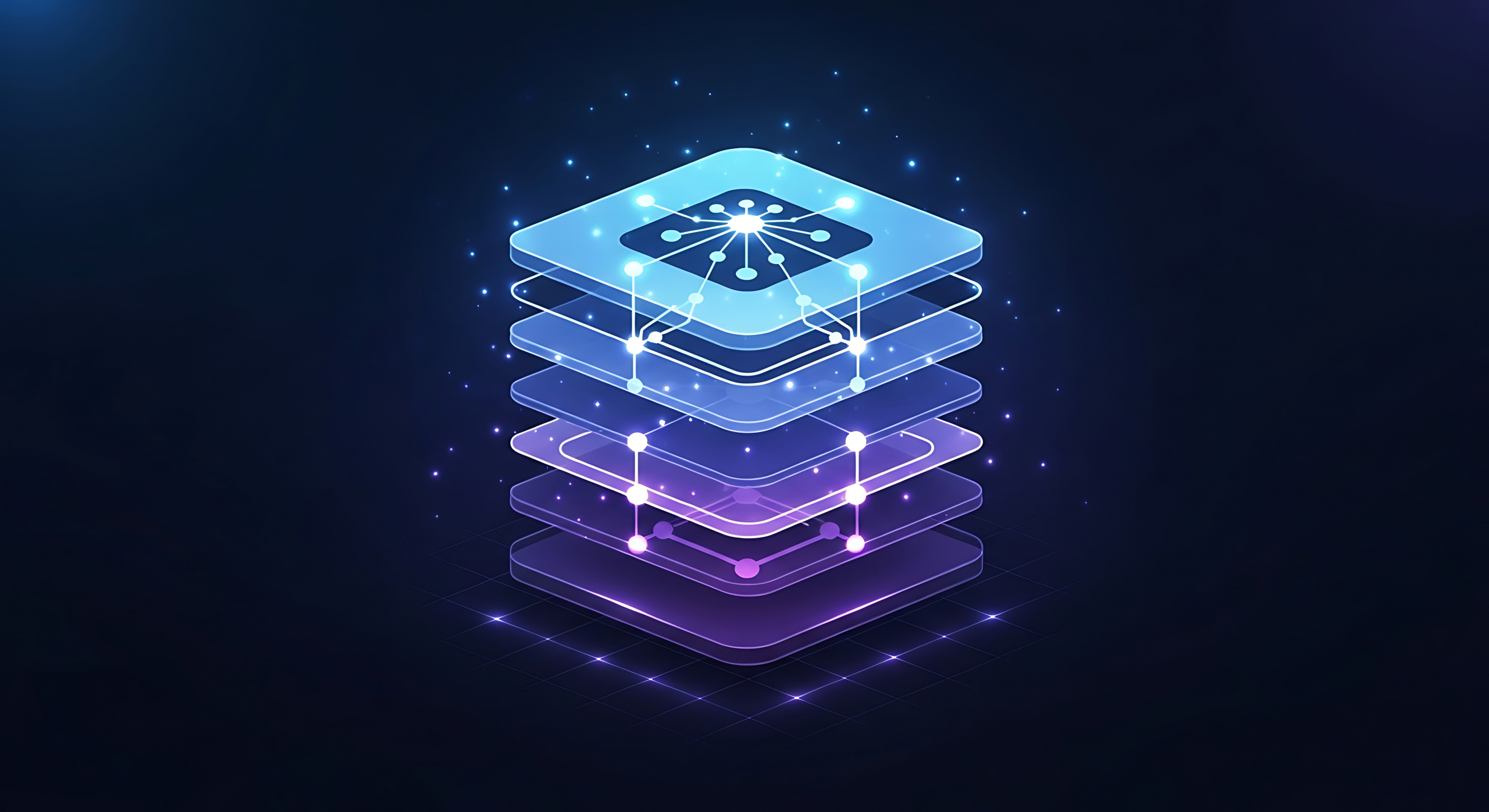
To move reliably from an operational signal to a contextualised recommendation, the platform needs to coordinate data ingestion, semantics, identity, governance, analytics, AI and delivery. The architecture can be considered across seven layers.

The Seven-Layer Architecture
of Orchestrated Intelligence
EXPERIENCE DATA
Voice, digital, queues, agents, WFM, quality, interaction metadata
↓
ENTERPRISE DATA
CRM, ERP, billing, finance, orders, service, HR, operational systems
↓
INTEGRATION & PROCESSING
Ingestion, transformation, normalisation, correlation, freshness, quality
↓
SEMANTIC CONTEXT
The relationships that turn connected data into understood data
↓
GOVERNANCE & PERSONA
What context is permitted, for whom, and under what controls
↓
INTELLIGENCE
Dashboards, KPI engines, forecasting, anomaly detection, conversational AI
↓
DECISION & ACTION
Where the architecture produces business value — the outcome layer
SOURCE → CONTEXT → INTELLIGENCE → PERSONA → DECISION → ACTION
The interaction and workforce layer. For a Genesys environment, this can include voice, digital interactions, queues, agents, WFM, quality, journey information, interaction metadata and conversation outcomes. These signals describe what is happening across customer and employee experiences, but represent only one part of the operating environment.
The second layer extends context into other business systems: CRM, ERP, billing, finance, orders, service management, HR, web and digital platforms, product platforms, operational systems and industry-specific applications. Depending on the use case, data may be transactional, event-based, historical, real-time, structured or semi-structured. The objective is not necessarily to centralise every piece of enterprise data before it can be useful, it is to make the required data consistently available to the intelligence process.
This is where source-system data becomes usable across applications. The integration layer needs to manage:
WITHIN THE EMITE ARCHITECTUREThis is where the data-integration capabilities supported by emite become important, creating a reusable data foundation rather than rebuilding the path to each source for every new dashboard or AI use case. |

Connected data does not automatically mean understood data. This layer establishes meaning, does “customer” mean an individual, account, household or organisation? Does “abandonment” use the same calculation across each business unit? Which employee handled a particular customer interaction? Which operational event corresponds with a spike in contact volume? Which order belongs to the customer currently speaking with the contact centre?
This requires more than schema mapping, it requires relationships between the entities represented by the data:
Once those relationships are established, AI can retrieve context rather than disconnected records. This distinction becomes critical as organisations move toward agentic systems.
Before information reaches analytics or AI, the system needs to understand what context is permitted, role-based access, persona definitions, data-level permissions, tenant boundaries, business-unit visibility, sensitive-field controls, security policies and data lineage.
The persona becomes part of the context request. A workforce manager asking about service performance and an executive asking the same question may access different levels of detail even though the underlying data is shared. The architecture therefore resolves two questions simultaneously:
Once data has been connected, contextualised and governed, multiple intelligence capabilities can operate over it: dashboards, KPI engines, trend analysis, anomaly detection, forecasting, machine learning, natural-language querying, generative AI and conversational analytics.
This is also where AskEmite provides a conversational interface into the governed business context. Instead of navigating through multiple reports, the user can begin with the business question, for example:
“Why did abandonment increase this afternoon?”
The intelligence process can resolve that question against the relevant data, persona and time period. It may identify that interaction demand increased, two queues accounted for most of the variance, staffing was below forecast, average handling time increased, and the demand spike correlated with an operational event. The answer is therefore constructed from connected context, not simply generated from a language model.
This is where the architecture produces business value, delivered through a dashboard, an alert, an AskEmite response, a recommendation, a workflow, or an operational intervention. For the workforce example, the sequence might be:
That is orchestrated intelligence. It creates a continuous pathway:
Source → Context → Intelligence → Persona → Decision → Action
And importantly, it does not require a single system to perform every role. Genesys can continue to provide specialised CX, interaction and workforce capabilities. Enterprise applications continue to operate their business processes. emite and ProDataIQ create the connected intelligence layer across those sources. AskEmite provides a natural-language pathway into that intelligence. The architecture brings those capabilities together around the decision.
The value does not come from connecting systems. It comes from connecting the right context to the moment a decision needs to be made.


 FROM CONTEXT TO ACTION: ACT WITH CONFIDENCE