What is emite?
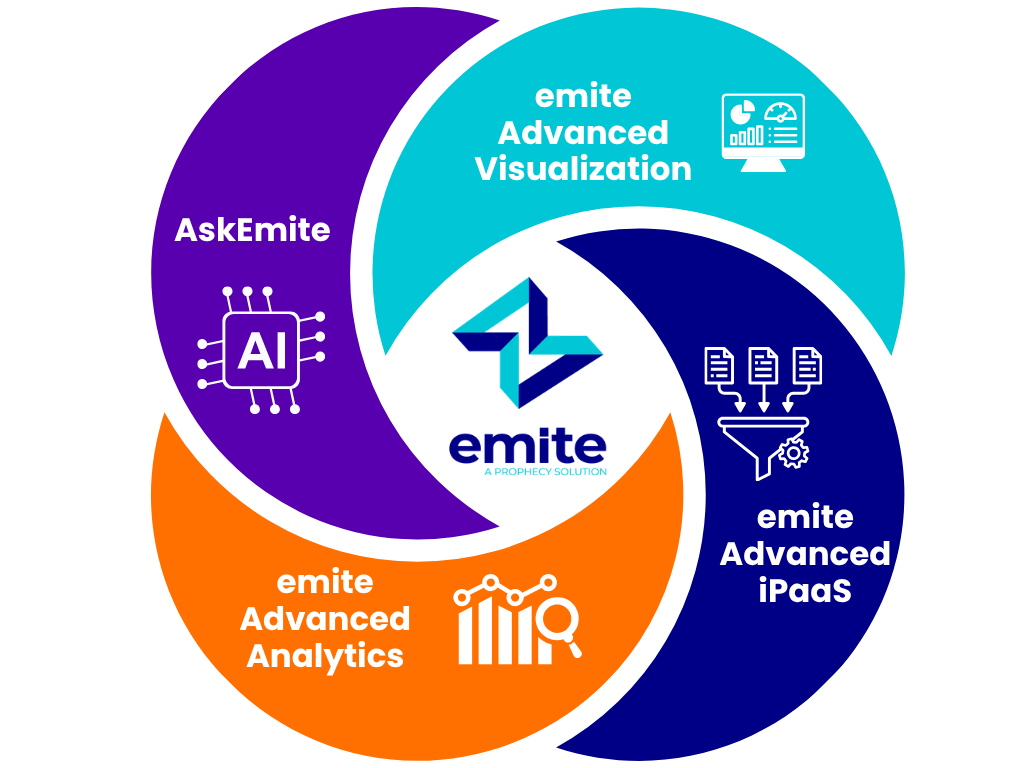
emite is a unified data platform that connects integration, analytics, and visualisation into a single system. It helps organisations turn fragmented data from CRMs, ERPs, CX platforms, and cloud services into a single source of truth, delivering real-time, trusted insight for faster decision-making.
Is emite part of Prophecy International?
Yes. emite is developed by Prophecy International Holdings Limited (ASX: PRO), a global software company that also delivers the Snare cybersecurity suite. emite is built on decades of Prophecy International’s experience supporting government, enterprise, and critical infrastructure organisations.
How is emite different from other analytics platforms?
emite uses a connector-less, API-first architecture rather than rigid point-to-point connectors, and unifies integration, analytics, and visualisation in one platform instead of separate tools. It also combines real-time and historical intelligence in a single governed environment, so teams can self-serve data without sacrificing consistency or control.
Does emite support AI-powered decision intelligence?
Yes. emite’s Advanced Analytics and ProDataIQ decision intelligence engine prepare and structure data for AI use, while AskEmite lets teams query that data in natural language and get immediate, contextual answers. Together they move organisations from static dashboards to active, AI-ready decision intelligence.
What industries does emite serve?
emite serves organisations across financial services and insurance, healthcare, retail, government and public sector, utilities and critical infrastructure, and telecommunications, with particular strength in contact centres and BPOs where data, performance, and customer experience are closely connected.
Is emite secure and compliant with enterprise standards?
emite operates within Prophecy International’s certified security and governance framework. Prophecy, emite, and Snare all hold ISO/IEC 27001:2022 certification as of 20 September 2025, alongside a mature secure development lifecycle and role-based access controls.