
BLOG
Every organisation today is investing in data.
More systems. More dashboards. More reporting. And increasingly, more AI.
And yet, despite this wave of investment, many organisations still face the same fundamental challenge: different teams are making critical decisions based on different versions of the truth.
This isn’t a data volume problem. It’s not a technology problem. It’s a data governance problem, and it’s costing organisations far more than they realise.
AI has made this more urgent, not less. As organisations layer AI tools and automation on top of their existing data infrastructure, the quality and consistency of that foundation is no longer just a reporting issue. It determines whether AI outputs can be trusted, actioned, or relied upon at all. Ungoverned data going into AI models doesn’t produce smarter decisions, it produces faster wrong ones.


The Hidden Cost of Ungoverned Data and Building a Good Data Culture
As organisations grow, so does complexity. New systems are introduced. Teams adopt their own tools. Metrics evolve independently, often in isolation.
Without governance, this creates a fragmented environment where:
- KPIs are defined differently across departments
- Data lives in disconnected, siloed systems
- Reporting logic is duplicated and inconsistent
- There is no single, authoritative version of the truth
The financial and operational consequences are significant. Gartner estimates that poor data quality costs organisations an average of $12.9 million per year. IBM’s research puts the wider economic damage even higher, quantifying the cost of poor data quality to the US economy alone at $3.1 trillion annually. McKinsey Global Institute found that poor-quality data can drive a 20% decrease in productivity and a 30% increase in costs.
These aren’t abstract numbers. They show up every day in conflicting reports during leadership meetings, in time lost reconciling numbers instead of acting on them, in erosion of trust in the data that decisions depend on, and in slower, less confident execution across the business.
And as AI enters the picture, the stakes rise. Forrester research found that data quality is now the primary factor limiting AI adoption in B2B organisations. AI doesn’t discriminate between clean and dirty data, it scales whatever it’s given. Poor governance doesn’t just slow down human decisions; it industrialises bad ones.
The problem compounds over time. And without intervention, it doesn’t self-correct.
What Data Governance Really Means
Data governance is often associated with policy documents, compliance checklists, or IT controls. This framing undersells it, and, arguably, helps explain why so many initiatives fall short.
Gartner defines data governance as the specification of decision rights and an accountability framework ensuring appropriate behaviour in data valuation, creation, consumption, and control. But the more practical definition is simpler: governance is about ensuring everyone in the organisation is working from the same, trusted foundation.
Forrester frames it even more directly as “the control plane for trust, agility, and scale”, noting that it has “outgrown its compliance roots” to become a core business enabler.
Effective data governance ensures:
- Metrics are defined once and applied consistently
- Data is unified across systems and sources
- Logic is transparent, traceable, and auditable
- Changes are controlled, documented, and understood
It creates clarity, at scale, across the business. And in an AI-enabled environment, it creates something else equally important: readiness. AI systems are only as reliable as the data they’re trained and operated on, you’ve probably heard this a lot but what does it mean and what do you need to do?
Governance is what makes data AI-ready, consistent, defined, traceable, and trustworthy enough to underpin, insights, recommendations and automated decisions , not just human ones.


Why Governance Initiatives Fail (And How to Avoid It)
Despite near-universal recognition of its importance, Gartner’s 2024 Chief Data and Analytics Officer (CDAO) Agenda Survey found that 89% of respondents believe effective data governance is essential for business and technology innovation, many organisations still struggle to get it right.
Gartner’s research is sobering: by 2027, 80% of data and analytics governance initiatives will fail, primarily because they lack a clear connection to business outcomes. “A governance program that does not enable prioritised business outcomes fails.”
The pattern is consistent. Governance programs that focus on data hygiene and control in isolation, without tying back to business value, lose stakeholder support quickly. Those that succeed reframe governance as an enabler: something that helps teams move faster and with greater confidence, rather than slowing them down with bureaucracy.
Gartner’s 2024 Strategic Roadmap for Data and Analytics Governance identifies a key failure mode: organisations using a rigid, command-and-control approach that is “insensitive to business context.” This makes them unable to respond quickly to commercial opportunities and creates resistance within the business rather than adoption.
The implication is clear: governance needs to be outcome-driven, business-aligned, and embedded into how people actually work, not imposed as a separate compliance function.
From Data Access to Data Confidence
Most organisations no longer struggle to access data. The real challenge is knowing whether that data can be trusted, and whether it can be acted upon with confidence.
High-performing organisations make a critical shift in how they frame the question.
From: “Do we have the data?”
To:”Can we trust it? Can we act on it with confidence?”
This shift matters. A 2024–2025 Forrester survey found that over 25% of data and analytics professionals report their organisations lose more than $5 million annually due to poor AI data quality. As AI takes on a greater role in decision-making, the integrity of the underlying data becomes more consequential, not less.
Gartner notes this directly: “If data is not trusted, it may not be used correctly to make decisions.”
As AI and analytics capabilities become more sophisticated, ungoverned data doesn’t just limit insight, it actively undermines it, producing models trained on inconsistent inputs and dashboards that different leaders interpret in different ways.
The organisations pulling ahead are those investing not just in accessing more data, but in ensuring the data they have can be trusted, acted upon, and traced.


Good Data Governance Enables Good Outcomes
Data governance is not a standalone initiative, it is the infrastructure that makes every other data investment perform.
Consider the breadth of what it touches:
Operations: Accurate, consistent performance tracking across teams and functions means leaders can diagnose issues quickly and respond with confidence. Without it, operational reporting becomes a source of friction rather than clarity.
Customer Experience: Inconsistent measurement across channels makes it impossible to understand what’s actually working. Governed data means a single, reliable view of how customers engage across every touchpoint.
Finance: Forecasting and financial reporting depend on agreed definitions and reliable inputs. Ungoverned data introduces errors and reconciliation cycles that consume finance teams’ time and reduce confidence in outputs.
Compliance: In an environment of increasing regulatory scrutiny, audit-ready, traceable data is not optional. It’s a requirement, and one that becomes exponentially harder to meet without a governed foundation.
Analytics and AI: Trusted insights are only possible when the data underpinning them is clean, consistent, and well-defined. Gartner predicts that by 2027, 60% of data governance teams will prioritise governance of unstructured data specifically to deliver generative AI use cases and improve decision quality. Governance is not a constraint on AI, it’s a prerequisite.
McKinsey research finds that organisations with mature data governance programs report 15–20% higher operational efficiency. These differentials compound over time, creating durable competitive advantage for organisations that invest early.
The Market Is Moving: Governance Has Entered the Mainstream
Until recently, data governance was treated as a back-office discipline, owned by IT and largely invisible to business leadership. That is changing fast.
Gartner published its inaugural Magic Quadrant for Data and Analytics Governance Platforms in January 2025, a significant signal that governance has evolved from a collection of fragmented tools into a dedicated, strategic platform category. The report notes that “traditional governance cannot keep up with the scale and speed required for AI-ready data ecosystems.”
Forrester’s Wave: Data Governance Solutions, Q3 2025 reinforces the shift, highlighting that “future-forward organisations are adopting data governance solutions that fuel AI models, speed up insights, and drive value creation across the business.” Governance is no longer a niche technical function, it is strategic infrastructure.
For organisations that have delayed investment, the window to catch up is narrowing. Gartner predicts that through 2028, 80% of S&P 1200 organisations will relaunch a modern data governance program built around a trust model, this is going to be crucial for organisations leveraging in kind of AI.
The question is no longer whether to invest in governance, but whether your organisation will lead or follow.

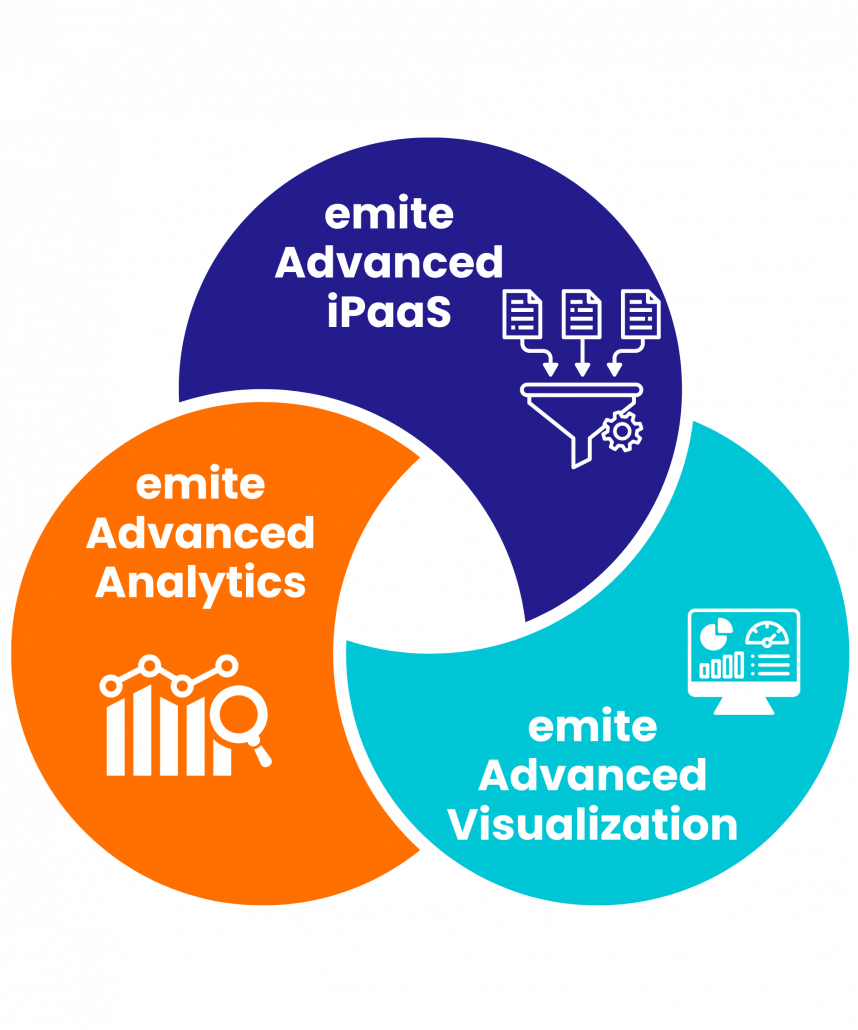
How emite Enables Governed Data at Scale
emite embeds governance into every layer of the data environment, making it practical to achieve the consistency and trust that high-performing organisations require.
Unified Data Integration
Connect data from CRM, ERP, CX platforms, and more, creating a single, consistent data foundation that eliminates the silos where inconsistency and mistrust take root.
This matters most in environments where complexity is highest: large enterprises where business units operate their own segmented instances of core platforms, or organisations that have grown through mergers and acquisitions and inherited a patchwork of systems that were never designed to work together.
emite brings all of it together, without requiring changes to any of the underlying instances. The integration happens in emite, and the rest of the business carries on.
Standardised KPI Framework
emite allows organisations to define business logic once and apply it consistently everywhere, across every business unit, every platform instance, and every report. There is no need to reconfigure individual systems, retrain local teams on new definitions, or manage divergent logic across different parts of the business. The standardisation is done in emite, which means the cost and effort of achieving consistency is a fraction of what a system-by-system approach would require. Leadership conversations shift from debating which number is right to acting on a shared version of the truth.
Trusted Insight Delivery
Every dashboard, every report, and every user, regardless of where they sit in the organisation, sees the same governed, reliable data. The confidence this creates is not just operational; it changes how decisions get made at the top. Leaders stop hedging on data quality and start moving.
The result is an organisation that has solved one of the hardest problems in modern business: making complexity manageable, and making trust in data the default, not the exception.
Building Your Data Governance Foundation
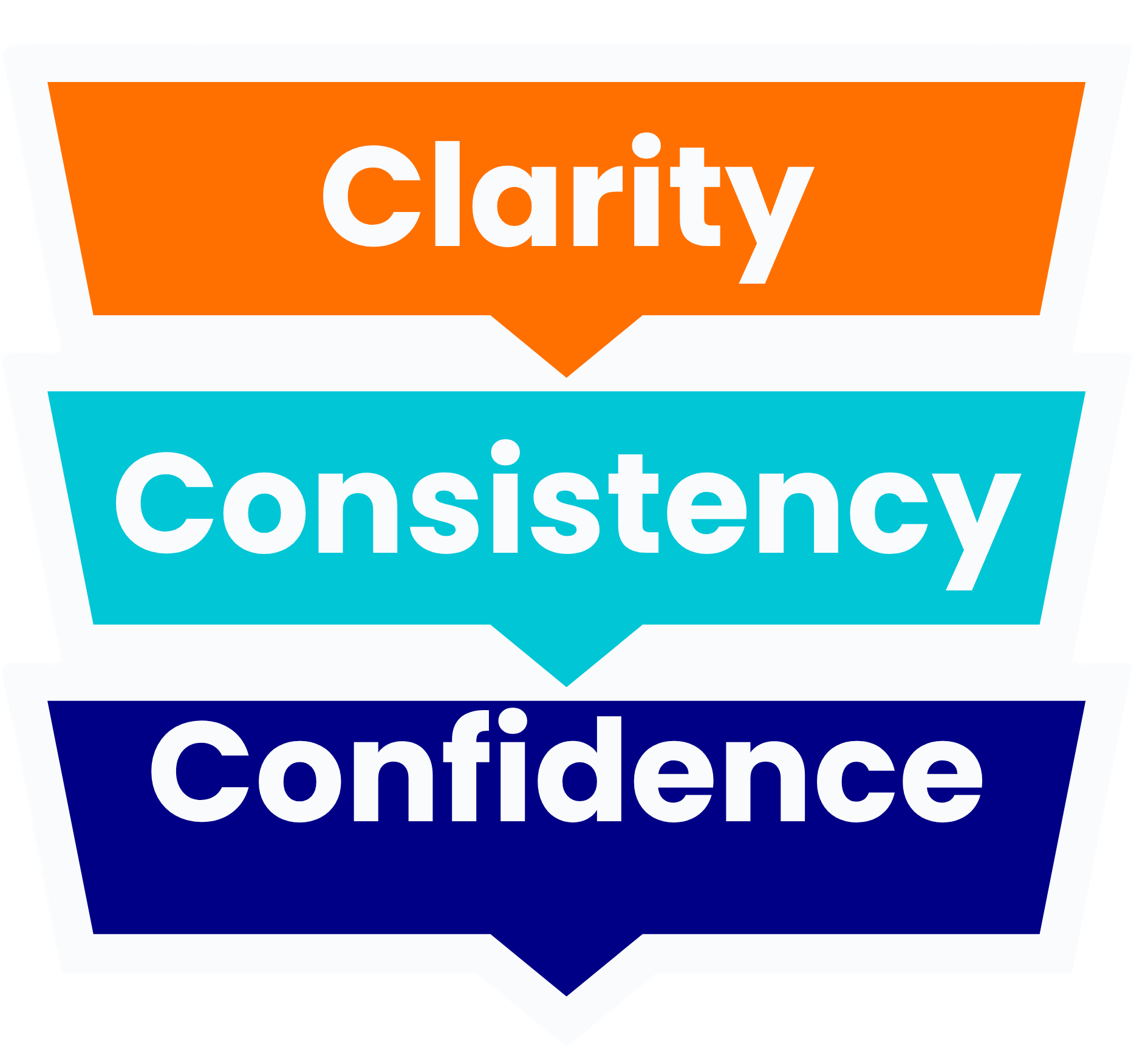
Organisations that govern their data well share three characteristics: clarity about what their data means, consistency in how it is applied, and confidence that what they are looking at can be trusted.
Achieving this is a journey, not a switch. But it starts with an honest assessment of where you are today.
Begin by examining:
- How consistently your KPIs are defined across teams and departments
- Whether your data is fully integrated across all key systems
- How transparent and traceable your reporting logic is
- The level of genuine trust your leaders have in the data they rely on
For many organisations, this assessment reveals gaps that have been quietly eroding performance and alignment for years. Surfacing them is the first step toward addressing them.

Next steps
For organisations looking to strengthen data governance, the first step is understanding where gaps exist.
Start by assessing:
- how consistently your KPIs are defined
- whether your data is fully integrated across systems
- how transparent and traceable your reporting logic is
- the level of trust leaders have in the data they rely on
Building a governed data foundation doesn’t happen overnight but it starts with a clear view of your current state.
Download the Data Governance Health Check to evaluate your organisation’s current maturity and identify the highest-priority areas for improvement.
From there, you can take practical, sequenced steps toward a more consistent, trusted, and scalable data environment, one that enables faster decisions, stronger performance, and a governance foundation built for the demands of AI and beyond.