
BLOG
In modern organisations, data is everywhere.
Customer interactions generate signals across CRM systems.
Operational platforms track performance metrics.
SaaS applications capture behavioural data.
APIs and event streams deliver real-time operational information.
With so much data available, many organisations assume they have strong visibility into their business.
But when leadership teams begin comparing reports across departments, a familiar problem often emerges:
Different systems report different numbers.
Revenue figures differ between finance and sales.
Customer metrics vary across CRM and support platforms.
Operational dashboards disagree with reporting tools.
This situation highlights a challenge that many organisations still struggle to solve:
the absence of a true single source of truth.

What Is a Single Source of Truth?
A Single Source of Truth (SSOT) refers to a unified and trusted data foundation where business metrics and operational insights are derived from consistent, synchronised data pipelines.
Instead of multiple systems producing conflicting reports, a single source of truth ensures that:
- data definitions are standardised
- metrics are consistent across departments
- analytics platforms use the same underlying datasets
- decision-makers rely on trusted information.
In simple terms, a single source of truth answers one critical question:
“Which number is correct?”
When organisations operate with a reliable SSOT, the answer becomes clear because all reporting and analytics environments are aligned to the same underlying data architecture.

Why Single Sources of Truth Matter More Than Ever
Historically, fragmented reporting was frustrating but manageable.
Today, the stakes are much higher.
Modern organisations increasingly rely on data to support:
- real-time operational decisions
- cross-functional collaboration
- predictive analytics
- artificial intelligence initiatives.
When data environments are fragmented, these capabilities become difficult — or even dangerous — to implement.
Inconsistent data pipelines can lead to:
- conflicting reports across departments
- delayed operational insights
- incorrect analytics conclusions
- unreliable AI recommendations.
In other words, the absence of a single source of truth undermines the credibility of data-driven decision making.


Why Most Organisations Still Don’t Have One
Despite the importance of a unified data foundation, many organisations still operate without a true SSOT.
This is rarely due to a lack of analytics tools.
The real challenge lies in data architecture.
Most enterprise data environments evolved over time through technology adoption rather than deliberate integration strategy.
New systems were added as the organisation grew.
- CRM platforms supported sales teams.
- ERP systems managed operations.
- Contact centre platforms handled customer interactions.
- SaaS applications improved productivity.
Each platform introduced valuable data.
But each also created another data silo.
Without strong integration architecture, organisations accumulate dozens of disconnected systems generating competing datasets.
The Integration Bottleneck
Traditional integration approaches often rely on point-to-point connectors.
System A connects to System B.
System B connects to System C.
While manageable at small scale, this model becomes increasingly fragile as technology ecosystems expand.
As more systems are introduced, integration complexity grows exponentially.
This leads to several challenges:
- integration pipelines become difficult to maintain
- new data sources take months to integrate
- data pipelines break without clear visibility
- duplicate datasets proliferate across analytics environments.
Over time, the organisation develops what many data teams now call integration debt.
And integration debt makes a reliable single source of truth extremely difficult to achieve.

The Role of Integration Platforms
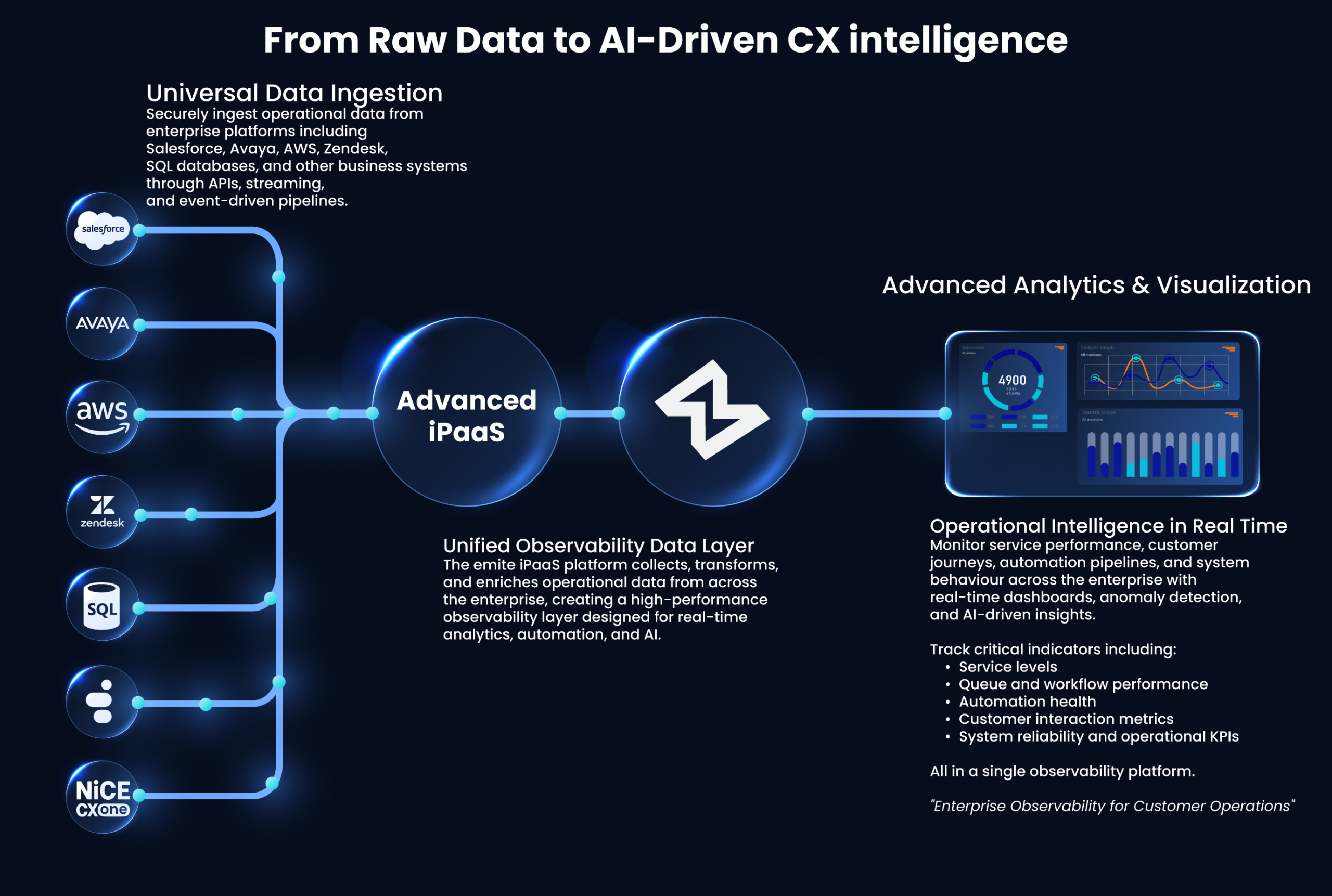
To address these challenges, many organisations are adopting Integration Platform as a Service (iPaaS) architectures.
Rather than relying on hundreds of point-to-point integrations, iPaaS platforms create a centralised integration layer capable of connecting systems, APIs, and event streams through a unified framework.
Modern integration platforms allow organisations to:
- connect cloud and on-premise systems
- standardise data pipelines
- orchestrate real-time data flows
- maintain governance and data lineage
- synchronise operational data across systems.
This approach allows organisations to gradually replace fragmented integration architectures with scalable and observable data pipelines.
Single Source of Truth vs Data Warehouse
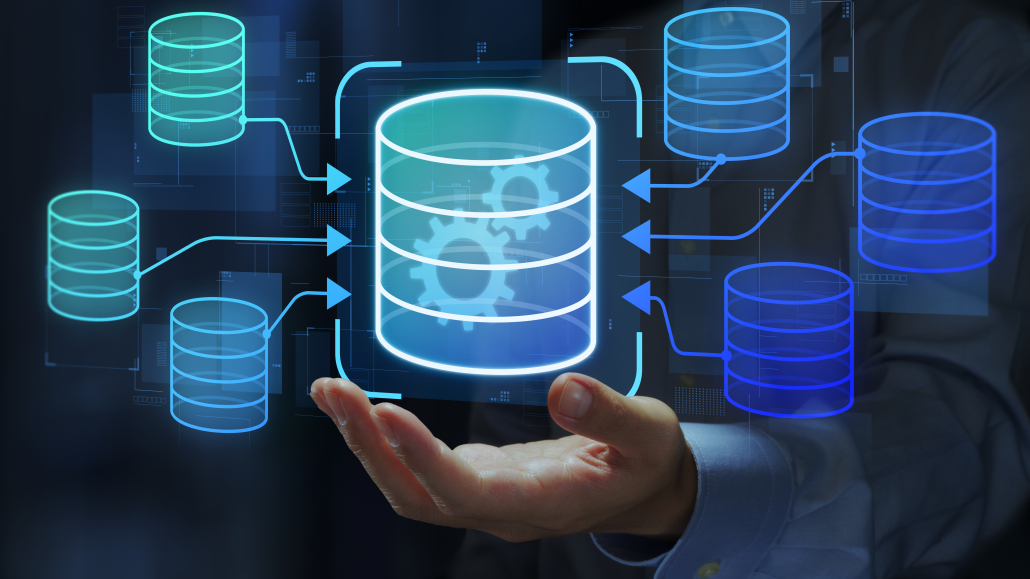
One common misconception is that implementing a data warehouse automatically creates a single source of truth.
In reality, a data warehouse is only part of the solution.
A true SSOT requires more than centralised storage.
It requires:
- reliable data ingestion pipelines
- consistent data definitions
- integration across operational systems
- governance and lineage visibility.
Without these foundations, even well-designed data warehouses can become repositories of inconsistent data.
Why SSOT Is Critical for AI
Artificial intelligence is accelerating the importance of unified data foundations.
AI models rely entirely on the quality and consistency of the data they consume.
When training datasets come from fragmented sources, organisations risk:
- hallucinated AI insights
- inaccurate predictions
- unreliable recommendations.
This is why many organisations now recognise that AI strategy begins with data architecture.
A reliable single source of truth ensures that analytics platforms and AI models operate on consistent, governed datasets.

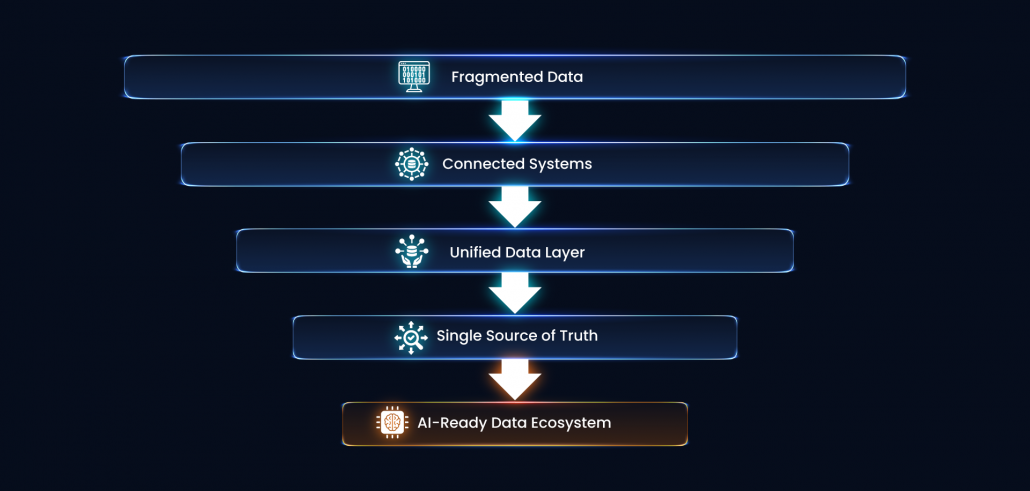
The Journey to a Single Source of Truth
Achieving a single source of truth is not a single project.
It is an architectural evolution.
Organisations typically move through several stages:
Final Thought
Many organisations invest heavily in dashboards, analytics tools, and AI platforms.
But without strong data integration architecture, those tools often operate on inconsistent foundations.
The organisations that succeed with data-driven decision making will be those that first solve a more fundamental challenge:
building a reliable single source of truth.

The Real Goal: Trusted Decisions
The ultimate goal of a single source of truth is not simply cleaner data architecture.
It is better decision making.
When organisations operate with trusted data foundations, teams can:
- identify issues faster
- collaborate around shared metrics
- trust operational insights
- scale analytics and AI initiatives confidently.
In other words, the organisation moves from fragmented reporting toward decision intelligence.
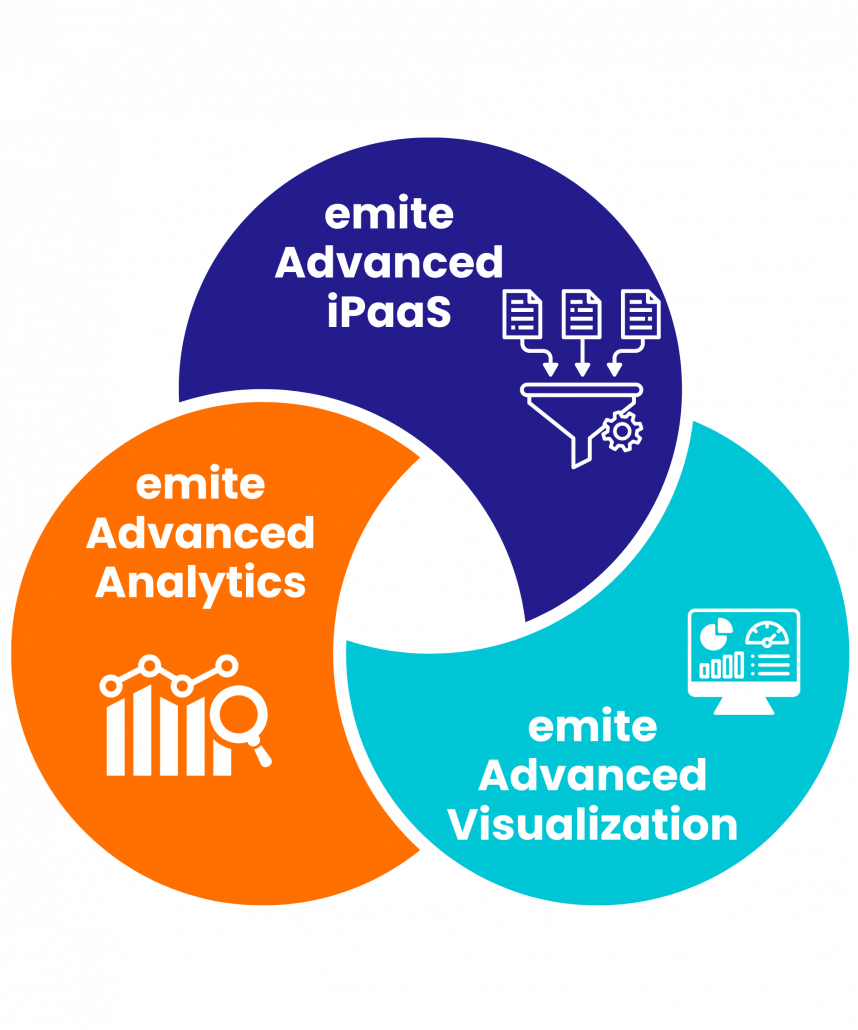
Explore the Single Source of Truth Diagnostic
Want to understand how close your organisation is to achieving a unified data foundation?